
Online Ads for Kids do not always look like advertising. They often appear as games, videos, rewards, or friendly characters. Many parents assume ads are easy to spot, but in today’s digital platforms, that is no longer true. Children now encounter child-targeted digital advertising woven directly into the content they enjoy.
This matters because children process information differently from adults. They are still developing judgment, impulse control, and emotional awareness. When digital advertising for children targets these gaps, it can shape behavior, preferences, and values long before kids understand what persuasion is.
Being aware of Online Ads for Kids is not about fear. It is about understanding influence.
A child plays a mobile game. After completing a level, a video appears offering bonus points if they watch it. The child taps “play” without hesitation. To them, it feels like part of the game.
This is how Online Ads for Kids work today. Ads blend into entertainment. They do not interrupt content. They become content.
Unlike television commercials, which clearly separate shows and ads, online advertising aimed at children often hides its intent. Children may not realize they are being marketed to at all. When ads feel like play, kids engage without skepticism.
Parents often miss this exposure because nothing looks inappropriate on the surface. The design is colorful. The language is friendly. The message is subtle.
Online Ads for Kids appear across nearly every digital environment children use.

Many free games rely on advertising for revenue. Ads appear between levels or as rewards. Some encourage kids to watch videos to earn coins, unlock characters, or advance faster.
These in-app ads for children train kids to associate attention with rewards. Over time, this normalizes advertising as part of play.

Video platforms expose kids to pre-roll ads, banner ads, and sponsored content. Some ads promote toys, snacks, or games. Others appear through influencer-style videos where promotion feels personal.
This form of marketing to children online is especially powerful because it builds trust.

As children grow older, algorithms begin shaping what they see. Interests are tracked. Ads repeat. Familiar brands appear again and again.
Online Ads for Kids become personalized, even when children do not understand how or why.
Advertising aimed at children works because it aligns with how kids think and feel.
Young children struggle to distinguish between information and persuasion. They often take messages at face value. When an ad says a toy brings happiness, they believe it.
This vulnerability is central to advertising effects on children.
Online Ads for Kids rely heavily on emotion. They use excitement, humor, and belonging. Ads show children having fun, winning games, or fitting in with friends.
These emotional triggers bypass logic.
Seeing the same product repeatedly creates familiarity. Familiarity creates trust. Trust creates desire.
This is a core strategy in child-focused digital marketing.
Constant exposure to Online Ads for Kids shapes how children view the world.
Children who see frequent ads often develop stronger material desires. They may believe happiness comes from owning things. They may compare themselves to others more often.
Advertising and child behavior are closely linked. Kids may show impulsive buying requests and lower tolerance for disappointment.
Studies on advertising influence on children suggest that repeated exposure increases materialism and reduces long-term satisfaction. These effects build slowly and quietly.
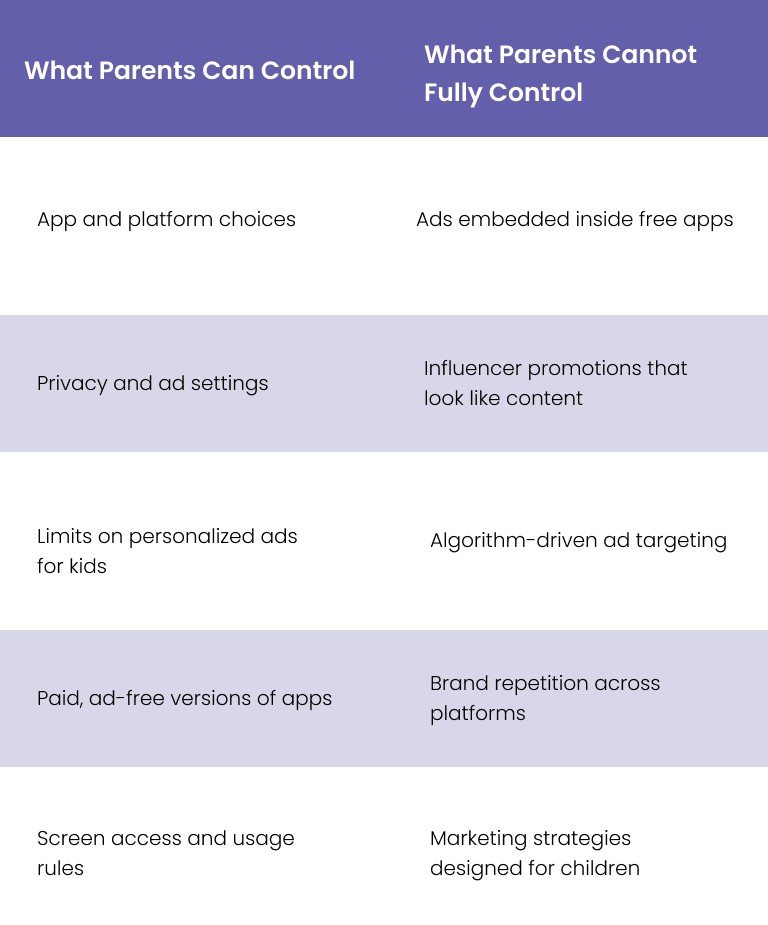
One of the strongest protections is education.
Children can learn that Online Ads for Kids exist to sell products. They can learn to ask:
What is this trying to sell?
Why is it shown here?
Do I really need this?
This builds advertising literacy for children. Over time, kids pause instead of reacting. They think before wanting.
Advertising literacy does not remove temptation. It reduces manipulation.
Online Ads for Kids are now part of childhood. They will continue to evolve with technology.
Parents who understand digital advertising and kids can guide without fear or control. Awareness builds autonomy. Guidance builds resilience.
When children grow up understanding influence, they make better choices. That awareness starts early with parents who notice what others overlook.