We are now living in a fully connected ecosystem. In 2026, children grow up surrounded by smart devices, AI assistants, instant messaging, and endless digital entertainment. Technology is not an extra tool anymore. It is part of daily life.
But as digital access increases, a new concern quietly grows among parents. It is called nomophobia.
Many families are asking the same question. When does normal screen use turn into emotional dependence? And more importantly, how can we protect children from developing unhealthy attachment to their devices?
Let us explore this step by step.
Nomophobia refers to the fear or anxiety of being without a mobile phone. At first, it may sound extreme. But in reality, it often begins with small habits.
A child feels uncomfortable when their battery runs low. They panic when WiFi disconnects. They repeatedly check their phone even without notifications. Over time, the device becomes more than a communication tool. It becomes a source of comfort.
In the digital era, this pattern is easier to form. Schools use online platforms. Friends connect through group chats. Games are social. Even hobbies are digital. Because of this environment, nomophobia in kids can develop quietly without parents realizing it.
The issue is not technology itself. The issue is emotional reliance.
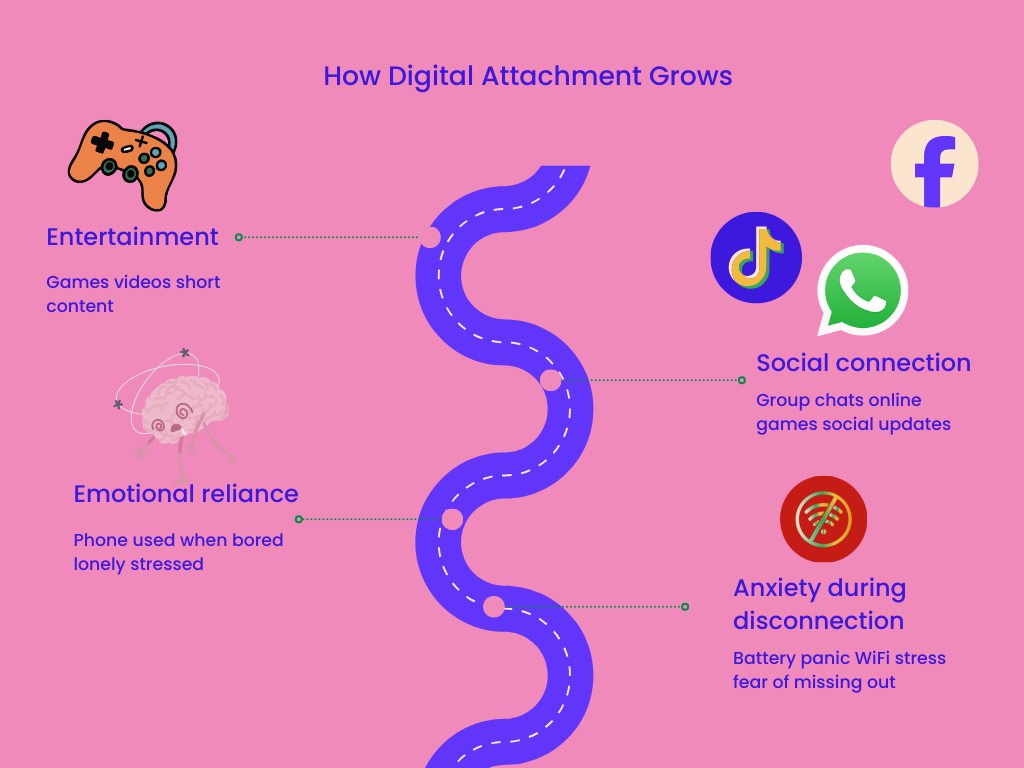
This condition does not appear overnight. It builds slowly through repeated digital exposure and emotional habits.
First, the phone becomes entertainment.
Then it becomes social connection.
Later, it becomes emotional reassurance.
When children feel bored, they scroll. When they feel lonely, they message someone. When they feel stressed, they escape into a screen. The brain begins to associate relief with digital access. This is how smartphone dependency grows.
In 2026, children rarely experience full disconnection. Notifications are constant. Social updates move fast. The fear of missing out becomes stronger. Over time, digital anxiety in children becomes normalized.
That is why awareness must come early.
Nomophobia does not usually appear suddenly. It develops through repeated digital patterns that slowly shape emotional responses. Recognizing the symptoms early allows parents to guide, not punish.
Children may show visible anxiety when separated from their phone. The reaction often feels stronger than the situation requires. A low battery, weak signal, or temporary disconnection can trigger frustration or panic.
Some children repeatedly ask when they can access their device again. Others become moody during digital breaks. Fear of missing out becomes intense. They worry that something important is happening without them.
This emotional pattern signals phone separation anxiety. The device is no longer just useful. It feels necessary.
Behavioral signs are often clearer. A child experiencing nomophobia in kids may check their phone constantly, even without alerts. The habit becomes automatic.
Sleep patterns may change. Some children insist on keeping their phone next to them at night. They may wake up to check messages or updates. This increases screen dependency in children and affects rest quality.
You may also notice reduced focus during offline activities. Homework feels harder. Conversations feel interrupted. Hobbies that once felt exciting now seem dull without digital stimulation.
The device slowly becomes a psychological safety object.
In stronger cases, physical signs of stress appear during forced disconnection. Children may look tense or restless. They struggle to relax without their device nearby.
Some may experience headaches or stomach discomfort when they feel socially cut off. These reactions reflect stress linked to unhealthy digital attachment, not simple stubbornness.
Enjoying technology is normal. Panic is not. When reactions become disproportionate and repeated, parents should pause and observe.
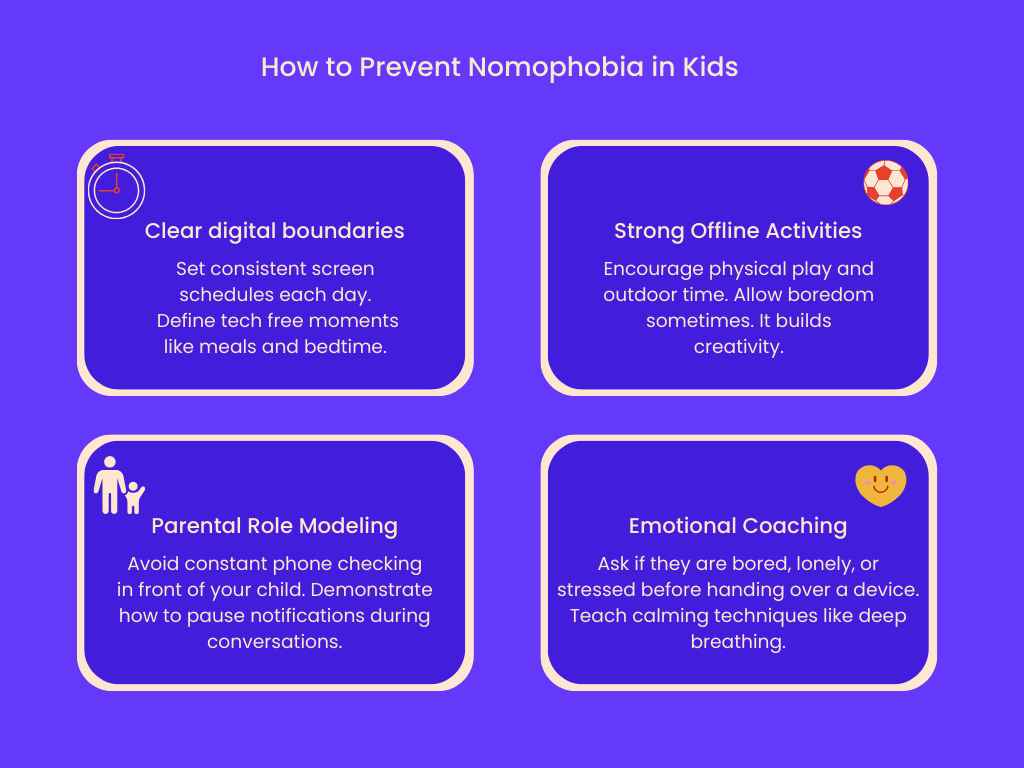
Prevention does not mean removing technology. In a fully digital society, that is unrealistic. Instead, parents should focus on balance.
First, create predictable digital boundaries. Clear screen time routines reduce uncertainty and lower anxiety. Children feel safer when rules are consistent.
Second, encourage strong offline experiences. Sports, reading, creative play, and family discussions strengthen real world engagement. When offline life feels meaningful, the phone becomes less dominant.
Third, model healthy digital behavior. Children learn more from what they see than what they hear. If parents constantly check their phones, children will mirror the same pattern.
Fourth, teach emotional regulation. Help children name their feelings. Ask simple questions like, “Are you bored, or are you worried about missing something?” Awareness reduces automatic habits.
Most importantly, keep communication open. Do not shame. Do not label. Instead, discuss balance and digital wellbeing regularly.
Technology is not the enemy. It brings education, creativity, and connection. But emotional dependence is different from healthy use.
Nomophobia grows quietly in a world where connection never stops. That is why parents must stay observant and proactive.
When we build strong offline bonds, set clear boundaries, and guide children with empathy, we help them grow into confident digital citizens.
The goal is not to raise children who fear technology.
The goal is to raise children who can live with it without being controlled by it.