Television is part of daily life in many families. Sometimes it helps parents get through a busy day. Other times, it becomes a point of tension. Because of this, the real question is not whether children watch TV, but how parents choose TV shows for kids in a way that truly supports their child.
Over time, many parents notice something important: TV shows for kids do more than fill time. They influence mood, attention, language, and even how children handle transitions. Some shows leave kids calm and curious. Others make everything harder once the screen turns off.
That difference is not random. It comes from how a show is designed, how a child experiences it, and how TV fits into daily life. The tips below go deeper into these factors, so parents can make decisions with more clarity and confidence.
Every TV show teaches something, even when it is not labeled as educational. The question is what kind of habits it builds.
Some TV shows for kids encourage listening, following a story, and noticing emotions. Others train children to expect constant movement, quick rewards, or loud stimulation.
Over time, children adapt to what they watch. If a show relies heavily on fast cuts and nonstop action, children may struggle more with patience and focus afterward. On the other hand, shows with clear storylines and emotional cues often support longer attention and calmer behavior.
When choosing a show, try asking:
Does this show reward patience or constant excitement?
Does it encourage thinking, or only reacting?
Age ratings are a starting point, not a guarantee. Two TV shows for kids can share the same age label and still place very different demands on a child’s brain.
Cognitive load refers to how much information a child has to process at once. Shows with many characters, rapid dialogue, and frequent scene changes increase this load. For some children, especially younger ones, that can feel overwhelming.
Parents often notice this in small ways. A child may seem glued to the screen but frustrated afterward. Or they may repeat lines without understanding the story.
A good sign is when a child can retell what happened or talk about how a character felt. That usually means the show matches their developmental stage.
A show can teach letters or numbers and still feel emotionally intense. Emotional tone matters just as much as learning goals.
Some TV shows for kids create a sense of safety. Conflicts are resolved gently. Mistakes are normal. Emotions are named and accepted.
Others rely on chaos, sarcasm, or exaggerated reactions. While these shows may be funny, they can also leave children feeling unsettled or overstimulated.
Parents often notice that emotionally steady shows make transitions easier, especially before bedtime or after a long day.
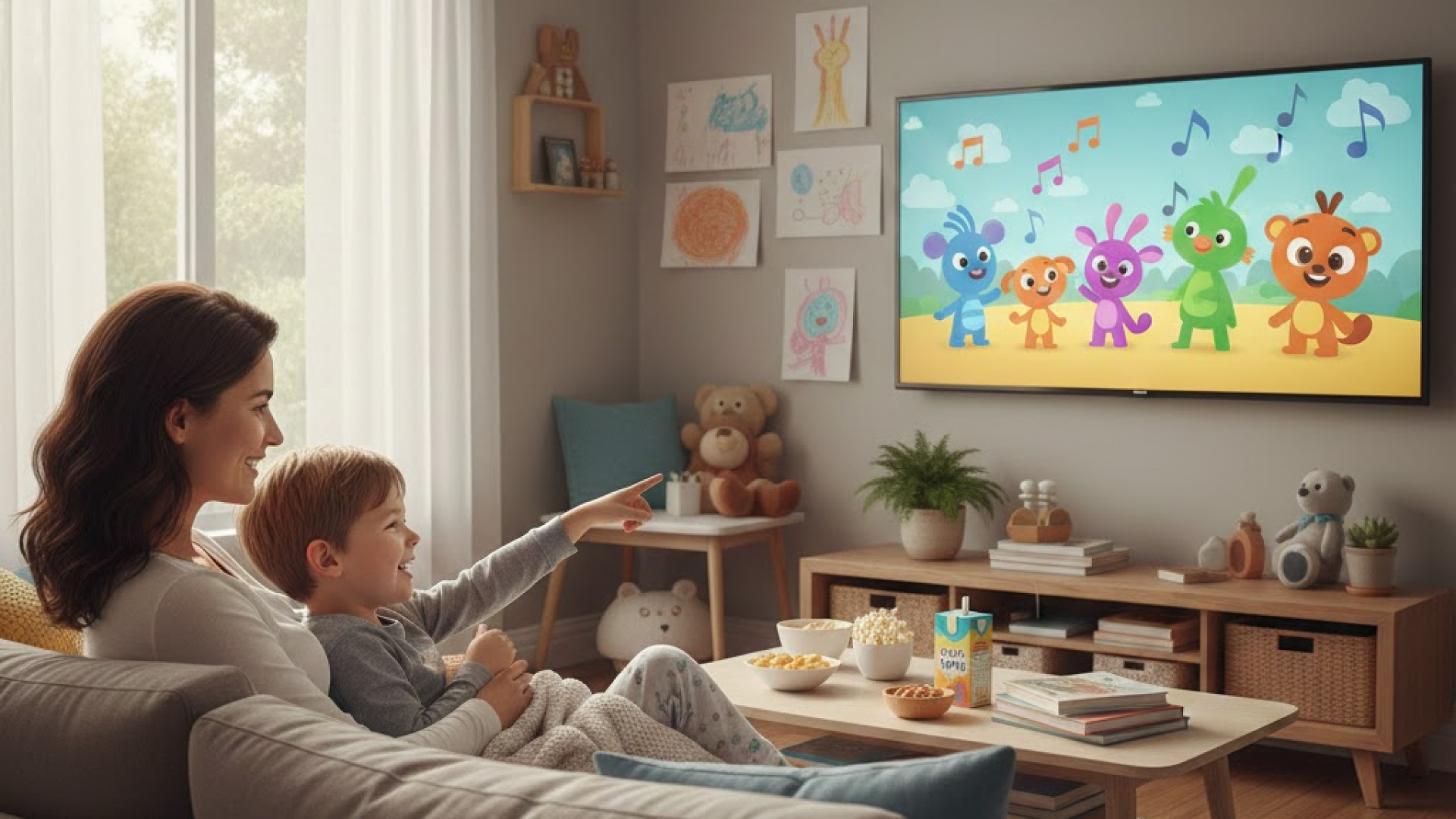
Watching together is not only about bonding. It also helps parents understand how a show is affecting their child.
When you sit in, even briefly, notice:
Does your child laugh, relax, or tense up?
Do they ask questions or zone out?
Do they want to talk about the story?
These signals say more than reviews or recommendations. Co‑viewing helps parents decide whether a show fits their child’s temperament and current stage.

A helpful question many parents ask is not “What does this show teach?” but “What does this show make harder afterward?”
Some TV shows for kids make it harder to stop watching. Others make bedtime, homework, or play transitions more difficult.
If a show regularly leads to power struggles, irritability, or emotional crashes, that information matters. It does not mean the show is bad. It may simply not be right for your child right now.
Children do not separate screen experiences from real life. They practice the same skills everywhere.
Through TV shows for kids, children practice:
Following stories
Reading emotions
Solving problems
Handling frustration
Because of this, TV can support development when adults help children slow down and reflect. Simple questions like “Why do you think that happened?” help connect the screen to real experiences.
A show that works well at one age may stop working later. Children change quickly, and so do their needs.
Many families find it helpful to re‑evaluate TV shows for kids every few months. What once felt calming may become boring. What once felt exciting may become overwhelming.
Staying flexible allows TV to grow with your child instead of becoming a fixed habit.
There is no perfect list of TV shows for kids. Trust grows when parents observe patterns, reflect on outcomes, and adjust without guilt.
Depth comes from paying attention. When parents look beyond popularity and notice how shows shape attention, emotion, and behavior, TV becomes easier to manage.
With thoughtful choices and ongoing awareness, TV can support family life instead of competing with it.