Parenting is tough. Every day, you face challenges that test your patience, creativity, and love. But what if there was a way to make it easier? Positive parenting offers a fresh approach that focuses on connection, respect, and guidance. At kids.tech, we believe in empowering parents with tools and insights to raise confident, happy children. In this article, we’ll explore what positive parenting is, why it matters, and how you can apply it effectively. Let’s dive in.
Positive parenting is a style that emphasizes encouragement, empathy, and clear boundaries. Unlike strict or permissive parenting, it balances firmness with kindness. You set rules, but you also listen. You discipline, but you focus on teaching, not punishing. Research shows this approach helps children develop self-esteem, emotional intelligence, and better behavior.
At its core, positive parenting builds a strong bond between you and your child. It’s not about being perfect—it’s about being present. But is it really as effective as people claim? Let’s take a critical look.
Positive parenting reduces behavioral problems in kids. Children raised this way often show less aggression and more cooperation. They also tend to have stronger relationships with their parents.
For example, when you praise your child for sharing toys instead of yelling when they don’t, they learn the value of kindness. Over time, this builds trust. Your child feels safe to express themselves, which is crucial in today’s fast-paced world.
Positive parenting also benefits you. It lowers stress and prevents burnout. You feel more connected to your child, and that makes the hard days more bearable.
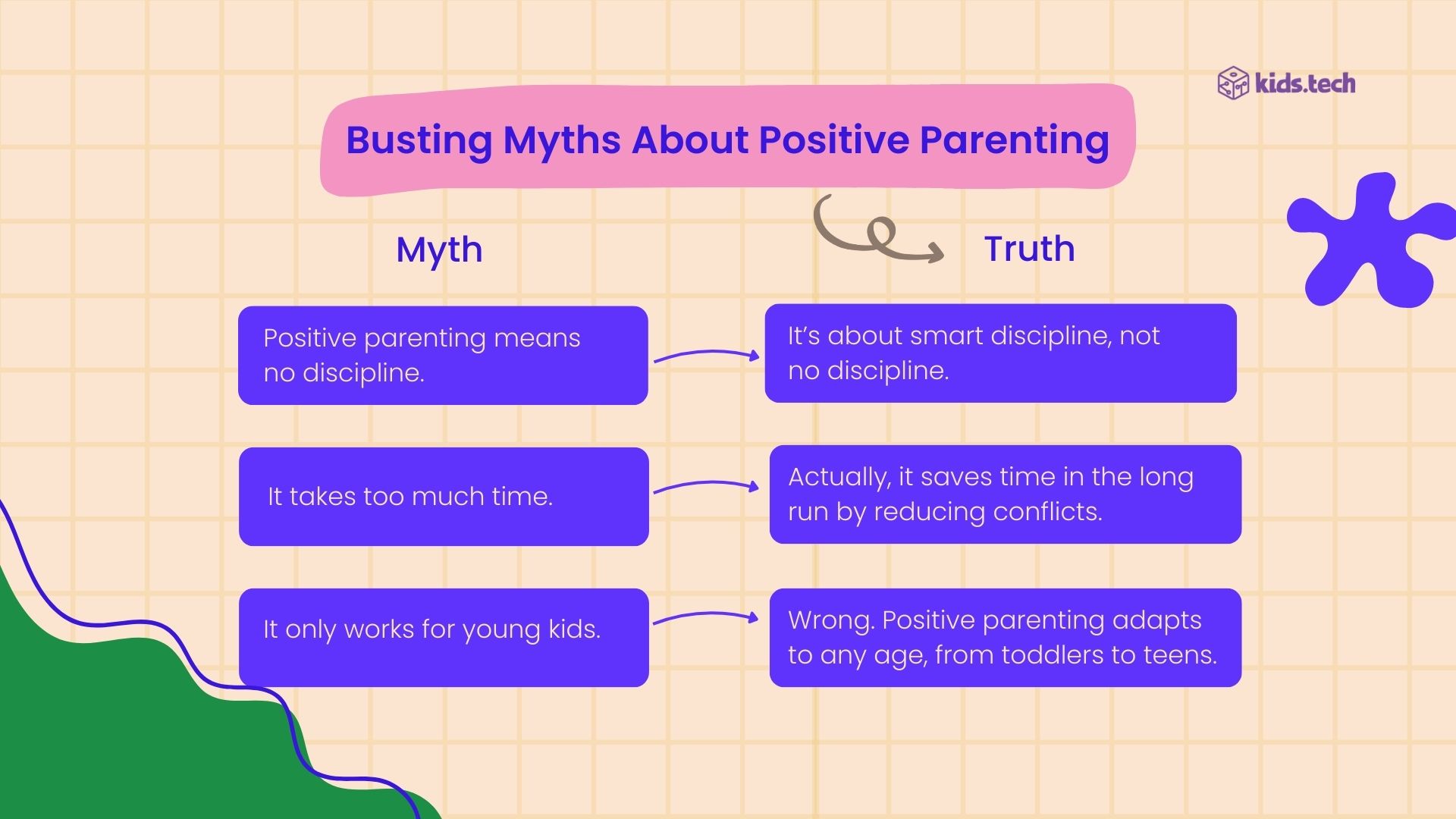
But it’s not all sunshine. Positive parenting requires consistency and patience, which can be hard to maintain. Critics argue it might seem too lenient. What if your child misbehaves repeatedly? Some worry that without strict punishment, kids won’t learn respect or responsibility.
Here’s the truth: positive parenting isn’t about letting kids run wild. It’s about setting clear expectations and following through. For instance, if your child refuses to clean their room, you don’t just ignore it. You explain why it’s important, offer help, and set consequences like losing screen time. The key is to stay calm and firm.
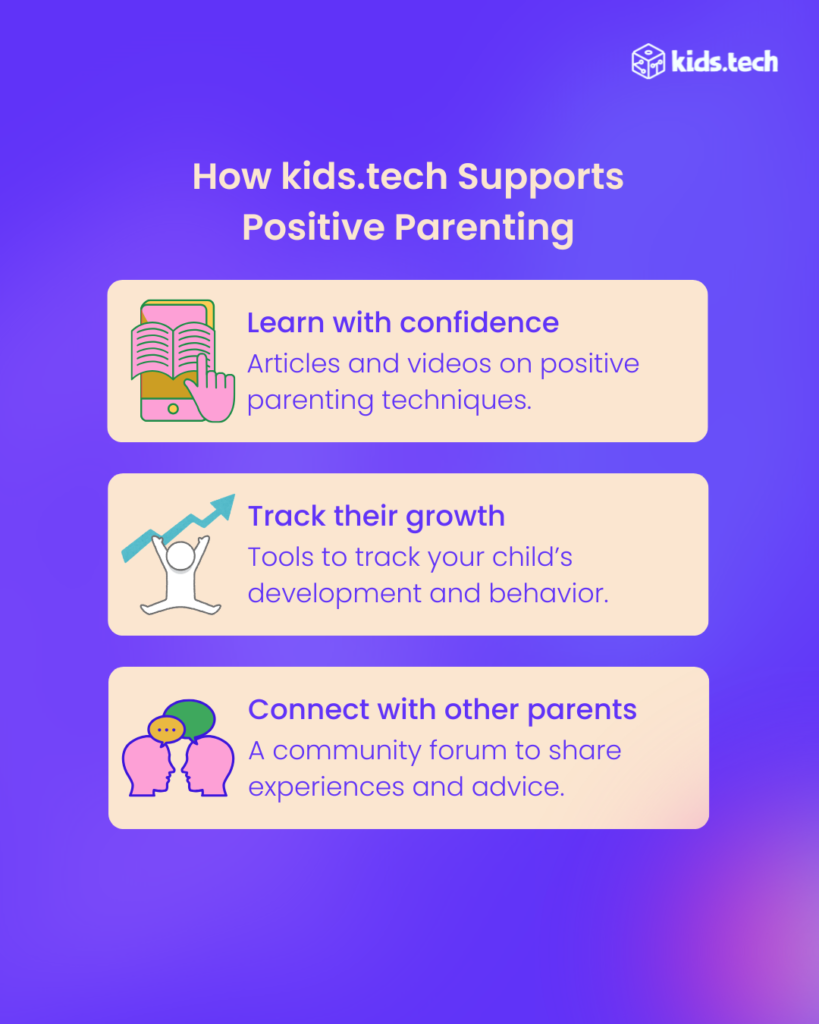
At kids.tech, we see these challenges as opportunities. Parenting isn’t easy, but with the right tools, you can make it work. Our resources and community can guide you every step of the way.
When your child talks, stop what you’re doing and listen. Ask questions. Show you care. This builds trust and helps them feel valued. For example, if they’re upset about a bad day at school, don’t just offer solutions. Let them express their feelings first.
Kids thrive on structure. Create simple, fair rules and explain why they exist. For instance, “We don’t hit because it hurts others.” Be consistent, but flexible when needed.
Catch your child being good. Praise specific actions, like, “I love how you shared your snack with your sister!” This encourages them to repeat the behavior.
Instead of yelling, use time-outs or logical consequences. If your child draws on the wall, have them help clean it up. This teaches accountability without damaging your relationship.
Kids copy what they see. If you want them to be kind, show kindness. If you want them to manage anger, demonstrate how you stay calm under pressure.
Some people might argue positive parenting oversimplifies complex issues like rebellion or mental health struggles. They have a point. No single approach can fix everything. But positive parenting isn’t a cure-all—it’s a foundation. It equips you to handle challenges with empathy and confidence.
Critics also say it demands too much emotional labor from parents. Fair enough. It can be exhausting to stay patient when your child tests your limits. But the payoff is huge: stronger family bonds, happier kids, and less stress for you.
Positive parenting isn’t perfect, but it’s powerful. It fosters respect, communication, and love in your family. Yes, it takes effort. Yes, you’ll make mistakes. But the rewards, happier kids, stronger bonds, and a more peaceful home, are worth it.
If you’re ready to try, start small. Pick one tip from this article and see how it goes. Need more help? Head to kids.tech for resources tailored to your needs.