
For Gen Alpha, voice assistants like Alexa, Siri, and Google Assistant aren’t just tools—they’re an essential part of their daily lives. Instead of typing questions, they speak directly to AI, asking things like “Siri, what’s 9 times 8?” or “Google, play my favorite song.” This voice-first habit is shaping Gen Alpha language and creating a generation that expects immediate, spoken responses. While it makes communication more accessible and efficient, it raises important questions. Will Gen Alpha be able to develop traditional reading and writing skills if their primary mode of communication is verbal?
Beyond voice commands, Gen Alpha language also relies heavily on emojis and visual language. Rather than sending long texts, they use emojis, GIFs, and memes to express emotions, ideas, and reactions. It’s not uncommon to receive a text from your child filled with nothing but 😭, 😂, and 🔥, conveying the message, “That was so funny, I’m laughing so hard!” While this shift toward visual communication might seem harmless, it prompts a concern. Are we sacrificing the ability to articulate thoughts and emotions in full sentences?
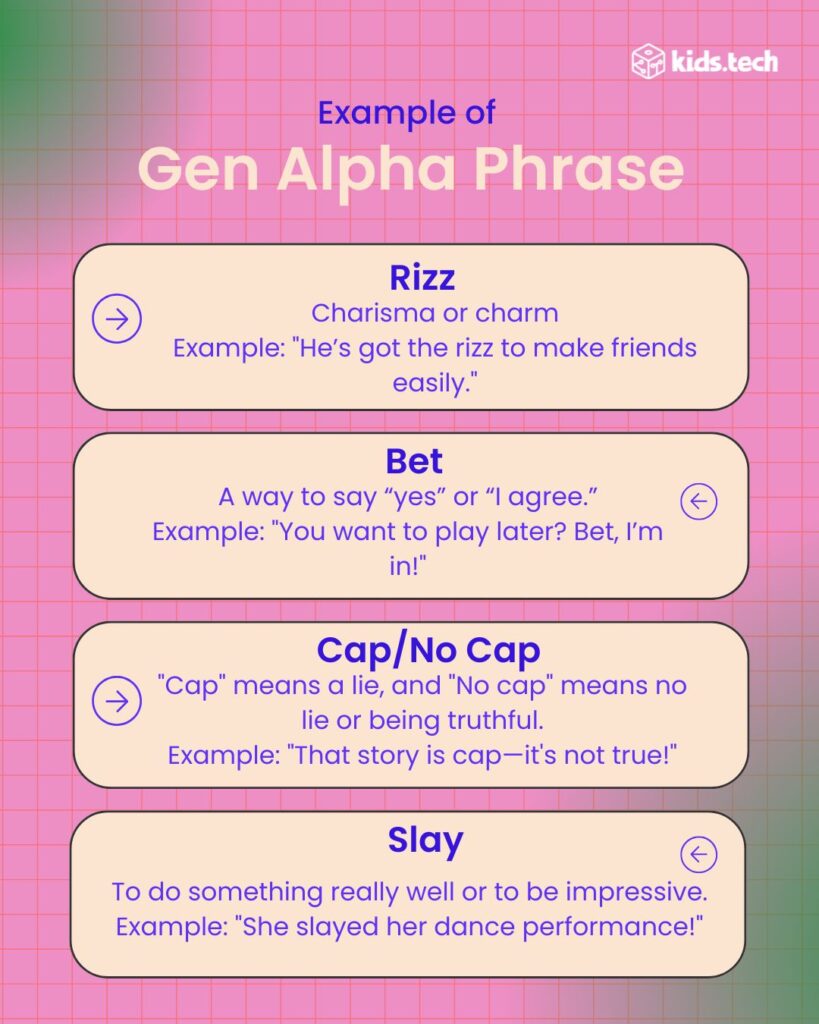
Every generation has its own slang, but Gen Alpha language is heavily influenced by gaming, TikTok, and internet culture. Words and phrases emerge and fade in the blink of an eye, making it difficult for parents to keep up.
These expressions may seem fun and playful, but they raise an important question. Is Gen Alpha truly developing strong communication skills, or are they just replacing meaningful conversations with trendy, surface-level phrases?
Language doesn’t just shape the way we speak; it also influences how we think, feel, and connect with others. While Gen Alpha language offers many advantages in terms of speed and convenience, it also presents challenges when it comes to social and emotional development. The ease of sending emojis, GIFs, and voice commands allows for quick exchanges, but it can also reduce the depth of conversations. A simple heart emoji ❤️ might replace saying “I love you,” and a meme might substitute for discussing a challenging day. As parents, we need to consider whether Gen Alpha is learning to express themselves in a meaningful way or if they are losing the art of deep, thoughtful conversations.
Another concern is the decline of traditional writing skills. With voice assistants and short-form digital communication dominating, children are no longer spending as much time handwriting or composing long-form written work. Schools now encourage digital note-taking and typing over handwriting, but will this affect their ability to write essays, letters, or even express complex thoughts on paper? If Gen Alpha language continues to rely on voice commands and shorthand communication, they may struggle with formal writing tasks in the future.
As parents, we cannot stop the wave of technology, but we can guide our children to develop balanced communication skills. First, it’s important to encourage real conversations. Set aside screen-free time to engage in face-to-face discussions at dinner or during car rides. This is when children can practice articulating their thoughts and emotions in a more detailed way. Additionally, encourage writing skills through journaling, letter-writing, or storytelling, which helps foster critical thinking and emotional intelligence.
Another strategy is to stay informed about the digital trends that shape Gen Alpha language. By learning the slang, acronyms, and platforms your child uses, you’ll have a better understanding of their world and can engage with them on their terms. Finally, parents should consider setting limits on voice assistant use to ensure that children don’t rely solely on AI for their learning and social interactions.
Gen Alpha language is fast, visual, and influenced by AI, gaming, and social media. While this is exciting and innovative, it also comes with risks. The shift toward emojis and voice-first interactions means that traditional language skills may be slipping away. As parents, we must guide Gen Alpha through this digital revolution, ensuring they develop strong communication skills that will serve them in both their personal lives and professional futures. The way we communicate may be changing, but we can still help them keep meaningful connections alive.